Top Trends I spotted at GDC Europe & Gamescom 2011

>

Last week I attended GDC Europe and Gamescom 2011 to spot the emerging trends for the upcoming year of game-development and how brands can utilize games as a marketing tool. These are my findings:
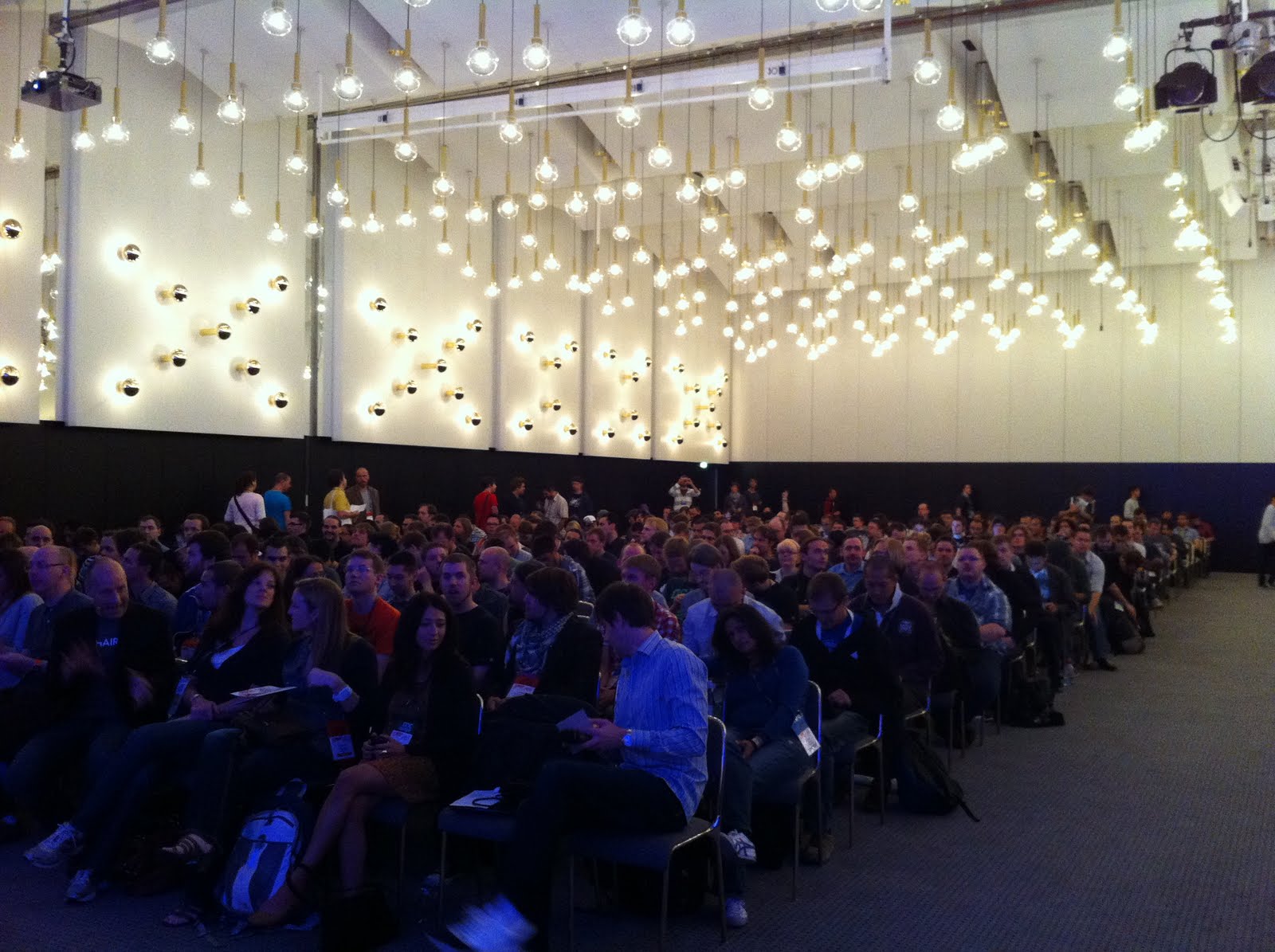
The workshop with Epic’s Developing Director was packed! 

1. A new business model: Free games & In game Micro transactions 

As described in my book (and earlier in the book ‘Free’ by Chris Anderson) the freemium model is a good way to quickly reach a large audience and then find ways to make money of your gathered crowd. The games industry is learning from these options and below I describe some options for your brand. Most of the options are especially interesting for digital content.

1. Provide a FREE tool (app), light version of your product (demo) or medium (website) to build up a large crowd and transform that crowd into a community encouraging them to become active on your platform (create postings, feedback, interact, helping each other, upload content, etc.) maybe even using a gamification layer to encourage people even more and challenging them to level-up and remain active.
2. Create innovative business models, not just selling banners and letting your community members pay for their membership. There are numerous examples of companies making an excellent turnover by selling additional services or in-game (virtual) products. Why not a pay per play model for games, literally paying per level I play. There’s so many games I never finished playing because I lost interest or just couldn’t push on. Most of FarmVille-like games use a freemium model where the game is free but you can buy interesting goods that help you booking results quicker.
In-game Transactions are key to make money on platforms like Facebook.
3. Promote sharing the game and create multiple discount. It lengthens the success of your game if you add multiplayer and let your crowd promote the content to other people by a ‘share’-button (or LIKE!)…

There was quite a row of people waiting to see Battlefield 3

Check a case description about the freemium model here by Flurry.

2. Social, Social, Social Gaming Platforms 

It seems that most game publishers are focussing on building their own platforms. After MSN Games, Spil Games, Zylom, Facebook, Steam (Valve), Electronic Arts and many, many others, it looks like all publishers want to either have their own community of gamers (like Steam and EA) or are trying to plug their content on large community networks with certain specific target group, for instance Vkontakte in Russia or Qzone in China.

3. Controlling movement – movement controls

After I visited the booths of Microsoft (Kinect), PlayStation (Move) and Nintendo (Wii and U-Play) I could only conclude that they all believe that movement games are our new ‘living room entertainment’ concept. Games vary from sailing, rowing, fitness, running, boxing, cycling and even fishing (if that’s a sport to you ;-)! It’s a good development considering obesity with kids (especially in USA) and the fact that children are challenged to move actively – even when it’s raining.

4. Device Independent Gameplay  

In the past game developers would ‘port’ existing PC games to other Platforms without regarding the specific context the games would be played in on that specific platform. Luckily these days developers and publishers spend more time redesigning their intellectual property to other platforms which can easily turn into great new gameplay elements and enriched ways of play. For instance – it was quite impressive to see this first person shooter on an iPad – it looks like Unreal Tournament in 2000!

Thanks to Unity, games can look amazing on different platforms (phone, PC, PlayStation etc,). Unity is a stunning ‘easily-create-your-own-game’ engine for game designers that like programming the easy way.   It’s comparable to a programming tool like HTML5 but Unity is compatible with all platforms and is not just web-or browser-based. This tool makes it possible to – for instance – chop wood with your mobile phone on a train trip in a mobile mini-game and utilizing the ‘money’ you made chopping wood in the train on your PlayStation console as soon as you get home and continue playing that same type of game (World of Warcraft for instance).

5. Cloud Gaming 

Another trend game developers expect is what I call ‘Cloud Gaming’. Companies like Onlive and IQU are providing this game content and are serving you content that you do not even have to ‘own’ or download on your PC, console or Phone. I mentioned this trend in my book already. Consuming digital content will evolve from ‘owning’ content to being able to ‘acces’ content. The business models are either subscriptions or an in-game economy based on micro transactions.

6. Games for a Greater Good and Serious Gaming

Although there weren’t much companies around during GDC I am still convinced that the interest to use games for serious objectives and public welfare is still rising. In one month I have been approached to speak at an event in New York, London and Moscow, so it must be a ‘hot-topic’. One of the few companies I met during GDC was Playdom (Jude Ower). Jude is looking for venture capitalists and game developers that wish to team up and develop game concepts that can contribute to a better world. Feel free to find more information about that on their website: www.playmob.com They are based in London (United Kingdom).

7. Intelligent Interaction Design: Dynamic Content! 

Companies that still own a website without interactive or dynamic options really need to wake up (yes yes, mine is under construction)… Dynamic Feedback is the new norm. This means that based on the database that is filled with information about your visitors (thanks to cookies), the database should show different information based on your consumers surf-behavior. It means that when I always immediately click ‘Products’ when I come to your companies website, after my third visit ‘Products’ is the landingpage or at least dominant on the landingpage of your website. The same goes for gaming portals. If visitor X always plays puzzle games on your website, the amount of suggestions on the right hand side should show at least 8/10 puzzle games (and maybe two featured games). It’s all about showing and sharing relevant information. This enhances the chance that consumers will forward, share, show (or LIKE) it to friends.

8. Gamification

Of course this is a running topic on my weblog and although there were especially programmers on the GDC Gamification is a topic that definitely has potential according to all the game developers I spoke with during my three days in Cologne.

My latest presentation about Gamification is available on Slideshare!

To end with some more pictures of the Gamescom in a short film.

Mobile Gaming Report – Thanks to Distimo

>Our friends at Distimo, a research company in Utrecht – The Netherlands, just released a 27 pages report about the mobile gaming market. These slides are the highlights, in my opinion. 


The major findings are:

• Games are still the most popular downloads for Phones, whether paid or free 
• The average selling price of games declined by 28% over the last year, while the revenue generated by the most successful freemium games increased tenfold during this period in the Apple App Store for iPhone.
• The presence of virtual currencies within games is one of the main reasons behind the popularity and monetization success of in-app purchases. 35% of the 300 most popular free games in June use some sort of virtual currencies to monetize in the Apple App Store for iPhone.
• Looking at the 300 most popular paid for applications, 72% of downloads are
generated by games while the remaining 28% of downloads are generated by
applications other than games in the Apple App Store for iPhone.
• The total revenue generated by top grossing games increased by 79% year-on-year in the Apple App Store for iPhone.
• A small number of publishers dominate total game downloads: ten publishers
account for more than half of all downloads among the 300 most popular paid
games in the Apple App Store for iPhone.
• Notwithstanding the popularity of games, the growth rate of the number of
applications other than games is higher than the growth rate of the number of
games in most stores. The number of games has increased faster than other apps only in the Apple App Store for iPhone, the Apple App Store for iPad and GetJar, but the growth rate for games in other stores is lower than for other applications.


It’s interesting to see that more and more games (and apps) are using the freemium model and use ‘micro-transactions / ingame-transactions’ (as described in my book ‘A Brand New Playground‘) to make money. It’s a trend that is apparently evident if you look at the data. 


For more mobile research and consultancy, please visit Distimo’s website: http://www.distimo.com

SmartGate – the Game 2 just launched…

>

I still discovered some bugs, but SmartGate the Game 2 has been released. After almost 16 months of talking, looking for the main problems around air cargo and in the offices of all stakeholders, IJsfontein delivered game 2 and my job as a consultant is done!
The first game was all about transporting cargo from shipper to airplane. Game 2 of the SmartGate project takes this a little bit further and brings more detail to the playing field. It let’s you experience the possible effects of your actions in a virtual logistic air cargo game.
My first thoughts at the time where that the ‘final’ game of the SmartGate project would be a sort of RUSE / Sim City / Logistic Tycoon in an air cargo environment where the player needs to build up a solid business (like the game ‘Jones’, if people remember the 90’s).
The main purpose of the game is to manage your air cargo business in a efficient, safe and reliable way. This means that, depending on the sort of cargo, it’s destination and the reputation of the trucker, you make decisions to either do the job or don’t and if there is a risk involved, that you manage that risk to your best ability (e.g. either employing specialist staff or having each shipment checked by Customs).

We also enclosed some minigames in the so-called ‘e-learning’ section where we challenge players on specific knowledge about exceptional situations and dilemma’s.

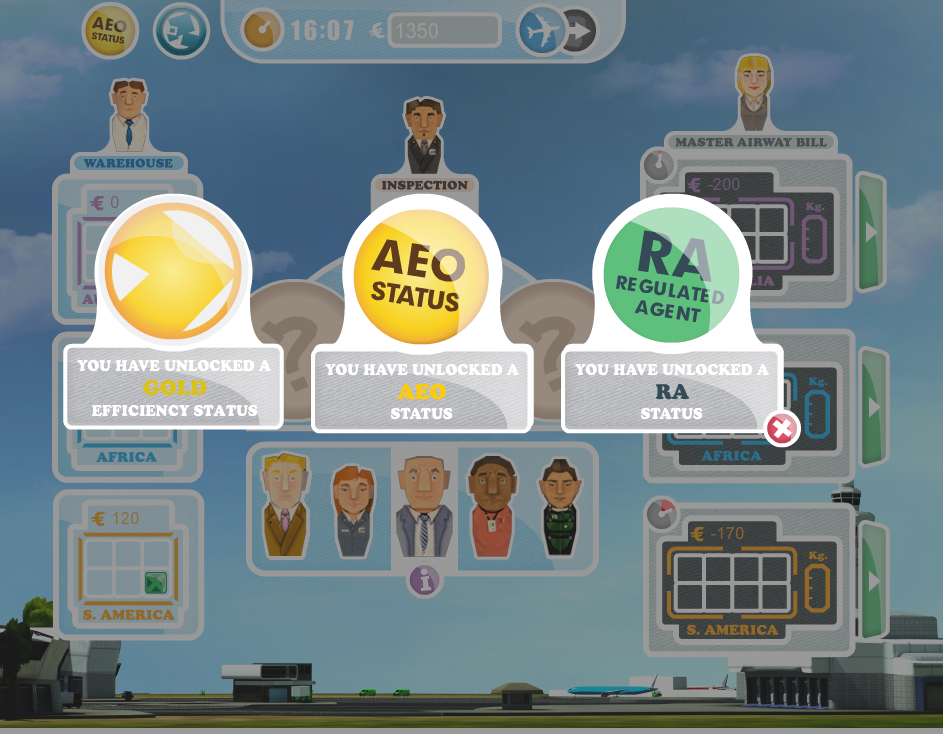
Besides this, we also included a badges system. The more efficient you are (planes leave the airport 100% full) or if you always check your cargo, you will receive badges and upgrades. The best thing to have in Air Cargo is an AEO status (Authorized Economic Operator) which means you are a reliable party within the chain.

And of course there is a leader board where you can check your score.

I challenge everyone to play the game and let me know what you think!

You can play it here: http://www.smartgatethegame.nl/game2/

RESULTS GAME 1 

The results of the first game where quite impressive by the way. There are about 2.000 people active in the Air Cargo sector around Schiphol airport and almost 1.300 of them played the game! That’s almost two-third of all people in the sector.

Apart from that we had 3.700 visits in four months time and a total of 184.000 page views!

Slide stairs at train station playful lifestyle

>

What a great way to gamify physical surroundings. A train station in The Netherlands build a slide next to stairs. Go visit Station Overvecht in Utrecht and experience it for yourself!

This is where life should be going! 😉

Gamification – Playful Lifestyle – A Slide!

>

Check out this great slide next to the stairs of a train station in The Netherlands (Utrecht Overvecht to be precise)… I will slide down later today, but it was wet when I was checking it out today and I did’n want to have a wet tush at the start of my day… hahaha. More 2 Come!

BrandNewGame on Gamification

>

Steam (the iTunes store for epic games) offers Free Games!

>


Steam – the online store for all ‘epic’ games like Call of Duty, R.U.S.E. and really many, many more will offer five F2P (Free to Play) Launch Titles Offering Exclusive Content to Celebrate Launch

Valve, creators of best-selling game franchises (such as Counter-Strike, Half-Life, Left 4 Dead, Portal, and Team Fortress) and leading technologies (such as Steam and Source), today introduced support for Free to Play (F2P) Games on Steam with the launch of five F2P games.

Available immediately, the launch titles are Spiral Knights, Forsaken Worlds, Champions Online: Free for All, Global Agenda: Free Agent, and Alliance of Valliant Arms (AVA). 

Beginning tomorrow (Weds) with Spiral Knights and concluding Sunday with AVA, each of the five launch titles will offer exclusive in-game content to those who try the “F2P game of the day” on Steam. In game transactions in all of the titles will be supported by Steam’s micro-transaction backend system that is available to Steamworks partners and currently used in Valve’s Team Fortress 2. 

“The introduction of Free to Play games is another example of the constant evolution of Steam,” said Jason Holtman, director of business development at Valve. “Free to Play games offer new game genres and game experiences for customers, while offering developers and publishers new revenue opportunities and the ability to reach customers in areas of the world where the traditional packaged goods model is less popular than F2P.” 

Specific details on the F2P games of the day and their exclusive in-game content will be made available in the coming days.

Steam is a leading platform for PC & Mac games and digital entertainment serving over 1,500 games to over 30 million active accounts worldwide. For more information, please visit www.steamgames.com

Gameful design & Gamification – an extensive presentation

>
Only 177 slides by a German called Sebastian Deterding from London…? 😉

Enjoy!

Great presentation on Gamification – it’s not lipstick on a pig…

>
Skip the short intro, and jump to Chief Scientist JP Rangaswami from Salesforce.com

Watch live streaming video from readwriteweb at livestream.com

It really starts getting interesting after 20 minutes when he starts talking about the 4 drivers people have:

1. Acquire
2. Defend
3. Bond
4. Learn

And the way he sees these elements in game genres, divided in hearts, spades, diamonds and clubs.

I can see the following comparisons based on our most essential drivers:

1. Acquire (greed: posses, collect, own, badges)
2. Defend (need for safety: a roof over our heads, safety, clothing, protection, food, etc.)
3. Bond (social, sharing, relations, interaction, CRM, Cooperative gameplay, teams, network)
4. Learn (skills, competences, knowledge, developing personality, rewards, level-up, XP, progress, etc.)

A lot of inspiration for my next book and a job I am currently working on! 😉

Future States – a short film about a gamifying world…

>

A great shortfilm by David Kaplan and Eric Zimmerman about games, gamification and how it could intrude into our daily life. One thing is not correct though. We will always know when we are playing and when we are nog playing. Stepping in and out of the circle of play is eminent and makes us very conscious of gaming and not-gaming.

More information here: http://futurestates.tv/episodes/play